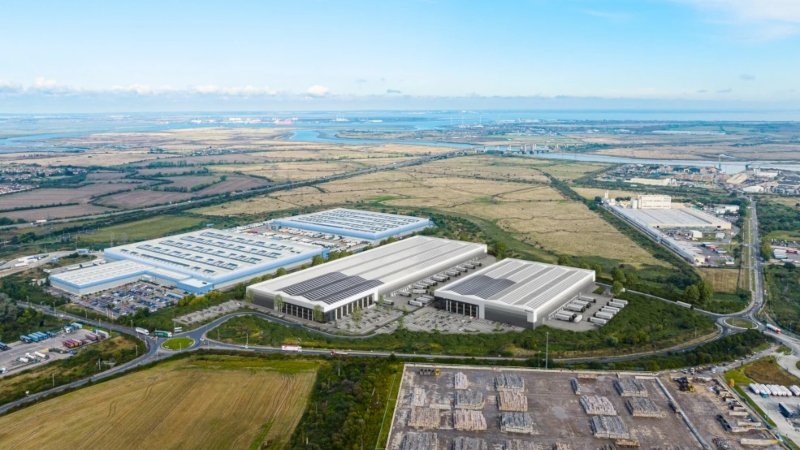
Kent has long been recognized as one of the Southeast’s most strategically positioned counties. Often referred to as the “Gateway to Europe,” its proximity to London, major ports, and international transport networks makes it a compelling location for commercial investors. As infrastructure investment accelerates and regeneration projects expand across key towns, Kent continues to strengthen its reputation as a prime destination for business growth.
For investors exploring commercial property for sale in Kent, understanding where infrastructure funding is being directed—and how it shapes tenant demand—is essential. Today’s strategic investment decisions are driven less by short-term market cycles and more by connectivity, long-term planning, and economic fundamentals.
Below is a detailed guide to Kent’s infrastructure developments and the growth hubs shaping its commercial property market in 2026 and beyond.
1. Transport Infrastructure: The Foundation of Commercial Growth
Transport connectivity remains Kent’s most significant advantage. The county benefits from major road networks, including the M20, M2, and M25, providing direct links to London, the Midlands, and the South Coast. High-speed rail services to London St. Pancras further enhance business mobility.
Ongoing improvements to road capacity, junction upgrades and rail reliability are reinforcing Kent’s position as a logistics and commercial hub. These developments support demand for:
- Distribution centres
- Logistics parks
- Office developments
- Mixed-use commercial schemes
For commercial investors, accessibility directly influences tenant appeal. Businesses prioritise locations that allow efficient travel for staff, clients and supply chains. As infrastructure strengthens, secondary towns may become increasingly viable investment locations.
2. Ashford: A Strategic Commercial Growth Centre
Ashford continues to evolve into one of Kent’s most prominent growth hubs. Its high-speed rail link into London and expanding residential population are attracting sustained commercial interest.
Regeneration initiatives in the town centre are creating opportunities for modern office space, hospitality venues and mixed-use developments. Ashford offers a compelling alternative to central London office locations, with comparatively competitive rental levels and strong connectivity.
Key sectors showing growth include:
- Professional services
- Technology firms
- Logistics operations
- Regional headquarters
With ongoing residential expansion supporting local footfall, Ashford’s commercial landscape is positioned for steady medium- to long-term growth.
3. Ebbsfleet and North Kent Regeneration
The Ebbsfleet Garden City development is one of the largest regeneration projects in the South East. Large-scale residential construction combined with new infrastructure is reshaping the commercial outlook for North Kent.
As new communities emerge, demand naturally increases for:
- Retail units
- Healthcare facilities
- Flexible office space
- Leisure and hospitality premises
Commercial investors often track residential expansion closely, as population growth typically stimulates business demand. The integrated planning approach at Ebbsfleet suggests sustained opportunities for supporting commercial services over the coming decade.
North Kent’s continued transformation strengthens its position as a growth corridor linking Kent to Greater London.
4. Maidstone: Stability and Administrative Strength
As Kent’s county town, Maidstone offers a more established and stable commercial environment. Its strong road connectivity and mature professional services sector provide dependable demand.
Commercial property in Maidstone continues to attract interest from:
- Legal firms
- Financial service providers
- Healthcare practices
- Regional enterprises
While Maidstone may not experience the same regeneration-driven momentum as Ashford or Ebbsfleet, its stability appeals to investors seeking predictable rental income rather than higher-risk speculative growth.
A balanced mix of office, retail and light industrial stock supports diversified investment opportunities.
5. Dover and Port-Centric Commercial Potential
Dover remains strategically significant due to its port, one of the busiest in the UK. Cross-channel trade, freight movement and customs processing underpin strong demand for logistics-related property.
Infrastructure improvements focused on freight efficiency and border operations reinforce Dover’s long-term commercial viability. Industrial estates and warehouse units located near key freight corridors can offer durable tenant demand.
Businesses involved in import/export, storage and distribution continue to cluster around major transport nodes, supporting the long-term value of port-adjacent assets.
6. Industrial and Logistics Expansion Across Kent
Kent’s location between London and continental Europe positions it well for logistics expansion. Growth in e-commerce and distribution networks has increased demand for the following:
- Last-mile delivery hubs
- Large-scale distribution warehouses
- Light industrial estates
Sites near motorway junctions and primary transport routes are particularly sought after. Industrial property has shown resilience in recent years, and Kent’s infrastructure strengths suggest continued performance within this sector.
Investors focused on warehousing and logistics often prioritise proximity to both population centres and transport links—areas where Kent performs strongly.
7. The Rise of Mixed-Use Developments
Modern commercial investment increasingly incorporates mixed-use planning, blending residential, retail and office space within integrated developments. These schemes generate built-in footfall and diversified income streams.
Kent’s town centre regeneration projects increasingly adopt mixed-use frameworks to revitalise high streets and create sustainable communities. Investors should evaluate how these integrated environments may enhance rental demand and capital growth potential.
Mixed-use assets can offer resilience by spreading risk across multiple property categories.
8. Key Due Diligence Considerations
Infrastructure-led growth does not automatically guarantee investment success. Thorough analysis remains essential. Investors should evaluate:
- Local planning policy and zoning restrictions
- Vacancy rates and tenant demand trends
- Competing developments in the pipeline
- Transport accessibility and future upgrades
- Long-term regeneration commitments
Understanding both current market conditions and projected growth ensures investment decisions align with broader economic direction.
9. Long-Term Outlook for Kent’s Commercial Market
Kent’s commercial property market is supported by structural strengths rather than short-term speculation. Its proximity to London, established logistics infrastructure, and ongoing regeneration provide a stable foundation for continued growth.
While performance will vary by sub-market and asset type, infrastructure-backed locations often demonstrate stronger long-term resilience. Investors who align acquisitions with strategic transport and regeneration zones are typically better positioned for sustained returns.
Conclusion
Kent’s commercial property landscape is closely linked to infrastructure investment and regeneration planning. From Ashford’s expanding business environment and Ebbsfleet’s large-scale development to Maidstone’s stability and Dover’s port-driven logistics strength, the county presents diverse opportunities.
For investors assessing commercial property for sale in Kent, identifying where infrastructure funding and residential growth converge offers a critical competitive advantage. Locations supported by transport improvements, population expansion, and strategic planning often deliver the most reliable long-term performance.
In a competitive South East market, Kent continues to demonstrate how connectivity and regeneration can drive sustainable commercial growth—making it a region worthy of close attention throughout 2026 and beyond.